Author’s Note: Thank you for joining me on this journey. If you are new to this story, I suggest you start with Chapter 1. Your comments and suggestions are very welcome!
Thomas was halfway through shelving a cart of books in the stacks when Caleb appeared, his footsteps soft against the carpeted floor.
“Thomas, right?” Caleb’s voice was casual, with just enough friendliness to suggest he wasn’t here by chance.
Thomas turned, balancing a hefty volume on the shelf before fully facing him. “That’s me,” he replied, giving a quick once-over to the familiar patron. “Caleb, right? The jazz guy.”
Caleb grinned. “That’s the one. Eleanor speaks highly of you—says you’re the one who keeps the place running.”
Thomas snorted, waving a hand dismissively. “She gives me too much credit. She’s the one holding this library together.”
“Yeah, I’ve noticed,” Caleb said, leaning against the end of the shelf. “She’s something else. Smart, sharp… almost too sharp sometimes. It’s like she knows what I need before I even ask for it.”
Thomas’s gaze flicked up at that, his expression neutral but alert. “She’s good at what she does. Been at it for a long time.”
“No kidding,” Caleb said, his tone casual but probing. “I mean, the lead she gave me on Charles Dupont? That connection between him and Armstrong? I’ve been chasing jazz history for years, and I’d never come across it before. It’s like she pulled it out of thin air.”
Thomas shrugged, slotting another book into place. “Eleanor’s got a knack for finding patterns most people miss. It’s not magic—it’s just how her brain works. She sees the big picture and the tiny details all at once.”
Caleb tilted his head, intrigued. “Is that something she’s always had? Or did she pick it up over time?”
Thomas turned to face him fully, his posture relaxed but his expression guarded. “Why are you so curious, Caleb?”
Caleb hesitated for the briefest moment, his grin faltering before he recovered. “I guess I’m just fascinated. I mean, I’ve worked with a lot of researchers, but Eleanor? She’s different. It’s like she has an instinct for this kind of thing.”
“She does,” Thomas said firmly. “But it’s not instinct alone. Eleanor works hard—harder than anyone I’ve ever met. She doesn’t just sit back and wait for answers to come to her. She digs, she cross-references, and she puts in the time. That’s how she gets results.”
Caleb held up his hands in a gesture of surrender. “I’m not questioning her work ethic, trust me. I just… I don’t know. She’s fascinating.”
Thomas smiled faintly, leaning on the cart. “She is. And she’s also private. So if you’re trying to figure her out, I wouldn’t push too hard. She’ll let you in when she’s ready.”
Caleb studied him for a moment, then nodded, his expression softening. “Fair enough. I don’t want to overstep.”
“You haven’t,” Thomas said, his voice lighter now. “But just so you know, Eleanor had a good morning. She came in glowing after coffee with you. I think she’s starting to feel more comfortable.”
Caleb’s smile returned, warmer this time. “I’m glad to hear that. It was a good morning—for both of us, I think.”
Thomas nodded, his expression softening. “Good. She deserves that. Just give her time, Caleb. She’s worth it.”
“I will,” Caleb said, stepping back. “Thanks, Thomas. I appreciate it.”
Thomas watched as Caleb walked away, his mind turning over the conversation. Caleb’s curiosity about Eleanor ran deeper than mere admiration—it was sharper, more probing. But Thomas trusted Eleanor to handle it in her own time.
As he returned to shelving books, Thomas decided one thing for sure: whatever Caleb’s interest, it wouldn’t shake his loyalty to Eleanor. She had enough on her plate without anyone complicating things, and Thomas would do everything in his power to keep her life as steady as possible.
——
Caleb stepped out of the library into the brisk afternoon air, the weight of his conversation with Thomas still hanging over him. He adjusted the strap of his leather bag, his mind replaying every detail—the easy way Thomas had defended Eleanor, the warmth in his voice when he’d mentioned her good mood after their coffee date.
It should have been reassuring. But instead, it churned up something darker.
As he walked down the quiet street, his thoughts turned to the call—the strange call that had started all of this.
It had come late one evening, a voice on the other end tipping him off to Eleanor Finch and her unparalleled knack for research. The caller had been polite but insistent, describing her as someone who could find answers no one else could. They’d known about his jazz project, about the missing pieces he’d been struggling to connect, and they’d framed Eleanor as the key.
At the time, it had seemed like a godsend, a stroke of luck in a field so often ruled by dead ends and guesswork. He had been intrigued and eager, willing to follow any lead that might bring him closer to the truth.
And there had been a catch, of course.
The caller had asked for a promise: in exchange for the tip, Caleb was to share the details of his interactions with Eleanor. What she said, how she worked, what he uncovered through her guidance—it all had to be reported back.
At the time, it hadn’t seemed unreasonable. Caleb had figured it was some kind of professional network or scholarly group interested in her methods. He’d agreed without hesitation, eager to begin.
But now…
Now, he felt sick.
He hadn’t even thought twice about the promise before meeting Eleanor. She had been a name, a potential resource, nothing more. But after spending time with her, after seeing her vulnerability, her sharp mind, and her quiet strength, the arrangement felt like a betrayal.
Caleb stopped walking, his breath fogging the chilly air as he stared at the pavement. Was he overthinking this?
The promise hadn’t seemed sinister. He hadn’t been asked for anything harmful, just information about how Eleanor worked. But the more time he spent with her, the less it felt like a simple exchange.
There was something about her that didn’t add up, something that made her different from anyone he’d ever met. He could feel it in the way she carried herself, the weight she seemed to bear, the flashes of uncertainty that flickered across her face when she thought no one was looking.
And now, knowing what he did, Caleb wondered if his promise was part of something much bigger than he’d realized.
The thought left a bitter taste in his mouth. He had promised to share her secrets, and now he wasn’t sure he wanted to keep that promise.
But if he didn’t…
The caller’s voice echoed faintly in his mind: “A promise made is a promise kept.”
Caleb shook his head, resuming his walk.
He needed to think, to figure out what this all meant—not just for his research, but for Eleanor. Because whatever this was, whatever the book and her incredible abilities were tied to, he was certain of one thing: she was at the center of something far bigger than either of them.
And he wasn’t sure if he could protect her from it—or from himself.
——
Miriam Winters hesitated on the threshold of the library, the strap of her bag slipping slightly from her shoulder. She adjusted it with a shaky hand and stepped inside. The smell of books and the quiet murmur of distant conversation washed over her, soothing but not quite enough to calm the tension coiled in her chest.
Her sister had insisted she come, claiming that Eleanor Finch—the mysterious and skilled librarian—had a way of finding answers no one else could. Miriam had resisted the idea, but desperation outweighed her doubts.
She spotted the circulation desk at the far side of the atrium. A woman was seated behind it, her head bent as she worked on a stack of papers. Miriam’s heart thudded painfully, but she forced herself to cross the room.
When she reached the desk, she cleared her throat.
“Excuse me?”
The woman looked up, her expression calm and patient.
“Yes?”
“Are you Eleanor Finch?” Miriam asked softly.
“I am,” Eleanor replied, setting down her pen. “How can I help you?”
Miriam hesitated, clutching her bag tightly. “I’m looking for something. Something my family has been trying to track down for years. My sister said you might be able to help.”
Eleanor tilted her head slightly, her expression thoughtful. “What are you looking for?”
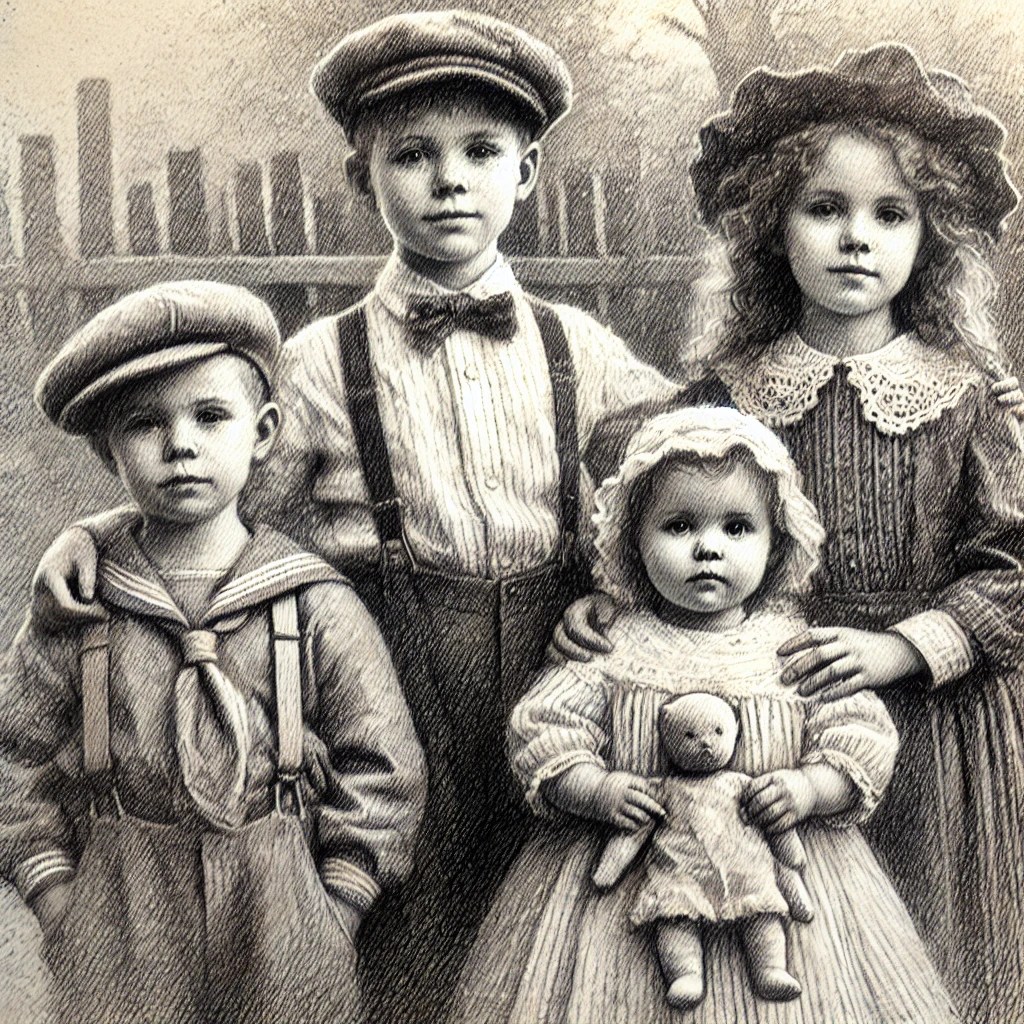
“A photograph,” Miriam said, her voice trembling. “It’s of my grandmother and her siblings as children. It was taken just before they were separated during the war. It’s the only picture of them together, but it’s been missing for decades.”
Eleanor’s brows furrowed. “Do you have any information about where it might have been?”
“Just a letter,” Miriam said, pulling a worn envelope from her bag. “It mentions a box of belongings that was sent to a distant relative, but we’ve hit nothing but dead ends.”
Eleanor reached out, taking the envelope and examining the faded writing carefully.
“I’ll look into it,” she said after a moment. “It may take a few days.”
Miriam exhaled shakily, nodding. “Thank you. I don’t know what else to do.”
Eleanor gave her a reassuring smile. “I’ll do my best.”
——
Two days later, Miriam was back at the library, her nerves fraying as she sat in one of the chairs near the circulation desk. Eleanor appeared from the mezzanine, a folder in her hands, and motioned for Miriam to join her at the desk.
“I found it,” Eleanor said, placing the folder on the desk.
Miriam’s eyes widened. “You did?”
“The photograph is with a private collector who specializes in wartime memorabilia,” Eleanor explained. “They’ve agreed to return it, but…” She hesitated, her tone shifting. “There’s something else.”
“What do you mean?” Miriam asked, her stomach sinking.
“The balance,” Eleanor said carefully. “To retrieve the photograph, you’ll need to make a promise.”
“A promise?”
“Yes,” Eleanor said. “You need to contact the local foster care organization and offer mentorship or assistance to a child in need. Someone who, like your grandmother, is at a crossroads in their life.”
Miriam blinked, caught off guard. “Mentorship? I don’t even know where to start with something like that.”
Eleanor’s expression remained steady, her voice gentle but firm. “You don’t have to be perfect. You just have to be present. The photograph is about connection, about family—continuing that legacy is the balance.”
Miriam swallowed hard, her mind racing. The thought of mentoring a child was daunting, terrifying even. But as she stared at the folder, imagining her grandmother’s face in the long-lost photograph, she felt something shift.
“I’ll do it,” she said finally. “I promise.”
Eleanor nodded, sliding the folder toward her. “Then it’s yours.”
——
A week later, Miriam stood in her apartment, holding the fragile photograph in her hands. The sepia-toned image was everything she’d hoped for—her grandmother as a child, her siblings clustered around her, their smiles filled with hope and mischief.
She had already reached out to the foster care organization, tentative but committed to keeping her promise. The coordinator had paired her with a twelve-year-old girl named Riley, a quiet but sharp child who reminded Miriam of her own younger self.
As she carefully placed the photograph in an archival frame, Miriam felt a sense of peace she hadn’t expected. The promise had felt overwhelming at first, but now, it felt like a step toward something meaningful—something bigger than herself.
And somewhere, in the quiet corners of her mind, she felt a whisper of gratitude—not just for the photograph, but for the balance she had helped restore.
——
The library was just beginning to stir as Eleanor flipped the switches, her usual morning ritual of lighting the rows of stacks bringing a sense of calm. There was the familiar silence as the soft golden light illuminated her quiet domain.
By the time she settled at the circulation desk, the first few patrons were trickling in. Among them was Caleb, stepping through the doors with his usual easy stride, a coffee cup in each hand.
“Morning, Eleanor,” he called out, his smile warm and familiar.
Eleanor felt her shoulders relax slightly as she returned the smile. “Good morning.”
Caleb placed one of the cups on the desk in front of her, its cardboard sleeve neatly aligned with the logo facing out. “Hazelnut latte, as always.”
“Thank you,” she said softly, wrapping her hands around the warm cup.
Caleb leaned casually against the desk, sipping his own coffee. “So, how’s the library world treating you today?”
“Quiet so far,” she said, her tone light. “But it’s still early. I’m sure chaos will find its way here eventually.”
He chuckled. “Isn’t that always the way?”
They chatted for a while, the conversation flowing easily. Caleb shared a story about a musician he’d interviewed the day before, while Eleanor talked about a particularly quirky archival request she’d handled the previous week.
But then, as the conversation shifted, Caleb’s tone grew a touch more casual—too casual.
“You know,” he began, taking another sip of his coffee, “I’ve been thinking about that lead you gave me on Charles Dupont and Armstrong. It was such a specific connection. How did you even know to look for that?”
Eleanor hesitated, her fingers tightening slightly around her cup.
“Oh, I don’t know,” she said with a small shrug, keeping her voice even. “I just followed a hunch. Sometimes things fall into place when you least expect them.”
“Hmm,” Caleb murmured, nodding thoughtfully. “You must have some process, though. I mean, you’ve got a talent for finding things no one else can. It’s impressive.”
Eleanor offered a faint smile, feeling a flicker of unease. The question didn’t seem odd on the surface, but there was something about the way he’d asked it—like he was trying to draw out information without her noticing.
Still, she brushed it off. Caleb was curious by nature, and his fascination with her work wasn’t new.
“Well, thank you,” she said simply, steering the conversation back to safer ground. “I’m glad I could help.”
The moment passed, and they continued talking, the previous tension fading as Caleb shared another anecdote from his research.
When he finally left, Eleanor felt the usual mix of relief and warmth. He had a way of brightening her mornings, even if his questions sometimes left her feeling unsettled.
As she returned to her work, the memory of his tone lingered faintly in the back of her mind, a quiet note of discord in an otherwise harmonious morning.
——
Eleanor leaned against the circulation desk, her tea cooling in her hands as she spoke with Thomas. The library was quiet, the soft murmur of patrons in the atrium creating a gentle hum in the background.
“Miriam seemed really grateful,” she said, her tone warm but reflective. “She sent an email this morning saying she’s already connected with the foster care organization. It sounds like she’s taking the promise seriously.”
Thomas nodded, a smile tugging at the corner of his mouth. “That’s great. You didn’t just help her find a photograph—you gave her a way to carry her family’s story forward. That’s no small thing, Eleanor.”
Eleanor’s lips curved into a faint smile. “It felt… right. Helping her, I mean. Even with the promise.”
Thomas tilted his head, studying her. “And you’re okay with the promises? They don’t feel… too heavy?”
She hesitated, her thumb brushing the rim of her cup. “They do, sometimes. But they make sense. It’s like the book is reminding people that balance matters.”
Thomas nodded thoughtfully, then added with a chuckle, “Maybe you should get Caleb to promise not to bug you about your research methods anymore.”
Eleanor blinked, his words catching her off guard.
“Caleb?” she asked, her brow furrowing.
“Yeah,” Thomas said, his tone casual. “You’ve mentioned before that he keeps circling back to how you found that meeting between Dupont and Armstrong. It’s not the first time I’ve heard him ask about it.”
“What do you mean?” Eleanor asked, her grip tightening on her cup.
“Well,” Thomas said, straightening slightly, “he’s asked me about it, too. Not directly, but, you know, casually. Like he’s just making conversation.”
Eleanor’s chest tightened, her mind racing. “What did he say?”
“Nothing specific,” Thomas replied, his tone light but tinged with curiosity. “Just stuff like, ‘Eleanor’s process is impressive. How does she do it?’ Or, ‘She has an eye for detail, doesn’t she?’ At the time, it seemed harmless. But now…” He paused, his gaze sharpening. “Now, it feels like he’s fishing for something.”
Eleanor’s thoughts flashed to her recent conversations with Caleb. He had asked about that meeting several times—sometimes with an intensity that felt almost interrogative, and other times with an air of forced casualness, as if he didn’t want her to notice.
The pattern she’d overlooked now felt glaringly obvious.
Thomas leaned closer, his voice lowering. “Eleanor, if this is bothering you, you don’t owe him an explanation. Your methods are your own. And Caleb might be a nice guy, but if he’s pushing, that’s not okay.”
Eleanor nodded slowly, her mind spinning. “It’s not just the questions,” she murmured. “It’s how he asks them. Like he’s looking for something specific.”
Thomas frowned. “Do you think he’s suspicious? Or… something else?”
“I don’t know,” Eleanor admitted, her voice quiet but firm. “But I think I need to figure it out.”
As Thomas moved back to the stacks, Eleanor remained at the desk, her thoughts churning. Caleb’s curiosity about the meeting wasn’t random, and now, knowing he had approached Thomas as well, her unease deepened.
For the first time, she began to wonder what Caleb really wanted—and why he was so fixated on that lead.
——
The next day Eleanor sat at her desk, the book open before her. The library hummed with quiet activity, but her focus was fixed on the request that had come in just moments ago.
A young woman named Claire had approached her, breathless and anxious, asking for help with a research question. It had been an odd request—something about an old map and its connection to a construction project. But as Claire had spoken, the desperation in her voice had struck a chord with Eleanor.
Now, with the book’s pages glowing faintly, Eleanor traced her fingers over the blank surface, letting the words form as they always did.
“A detour leads to safety.”
The words were cryptic, as always, but the story that followed painted a vivid picture. Claire’s usual route to work passed a construction site where a scaffolding collapse would occur tomorrow morning. It would happen without warning, and if Claire was there, she would be directly in harm’s way.
Eleanor stared at the page, her chest tightening.
She couldn’t let it happen.
The next morning, Claire arrived at the library again, her expression tense but hopeful. Eleanor had spent the night wrestling with the best way to approach her, but now, as Claire sat across from her at the circulation desk, she chose her words carefully.
“Claire,” Eleanor began, “I’ve looked into your question, and I think I found something that might help. The map you mentioned—it’s linked to an old detour route. It’s not in use anymore, but it’s still marked. You should check it out. It might be a safer option than the usual path.”
Claire frowned slightly. “You think I should take the detour?”
“Yes,” Eleanor said firmly.
Claire hesitated, but something in Eleanor’s tone seemed to convince her. “Okay. I’ll look into it.”
The following day, Eleanor sat at her desk, her heart pounding as she opened the book. The scaffolding collapse had occurred, just as the book had predicted, but Claire hadn’t been there. She had taken the detour instead, avoiding the accident entirely.
Relief washed over Eleanor. She had done it. She had saved someone.
But as she read further, her relief turned to dread.
“Safety for one shifts the scales. The detour leads another to harm.”
Her breath caught.
The book continued to write, detailing how Claire’s detour had delayed her arrival at work. Frustrated by the delay, she had called her boss while driving—a brief but distracted moment that caused her to swerve into another lane, forcing another car off the road.
The other driver, a middle-aged man, had crashed into a tree. He wasn’t dead, but the injuries were severe, and his recovery would be long and arduous.
Eleanor slammed the book shut, her hands trembling.
She had saved Claire, but at what cost?
The weight of the book’s warnings pressed heavily on her chest. The balance must be kept. She had interfered, and the consequences had rippled outward, touching another life in ways she hadn’t foreseen.
For the first time, she wondered if the book’s guidance was a gift—or a curse.
She leaned back in her chair, staring at the closed cover of the book. The room felt colder, the library’s familiar comfort replaced by a growing sense of dread.
What if helping someone was never simple? What if, no matter her intentions, every choice she made with the book came with a cost?
And how could she continue to use it, knowing that every action might cause harm she couldn’t predict?
——
Eleanor sat at her desk in the dimly lit library, the usual hum of work reduced to silence in the empty mezzanine. The book lay open before her, its blank pages glowing faintly in the muted light of her desk lamp.
She glanced down at its pages and noticed faint lines beginning to form, dark ink curling and stretching like vines across the parchment.
Her breath caught as the words revealed themselves, not a story or an answer, but something far more unsettling:
“The balance must be kept.”
She stared at the words, her heart pounding in her chest. Before she could make sense of them, more appeared below, the ink flowing swiftly across the page:
“Choices ripple. Promises bind. Tread carefully, for what you give may be what you lose.”
Eleanor’s fingers hovered above the page, trembling. This wasn’t the first time the book had offered cryptic warnings, but this felt different—more urgent, more personal.
“What are you trying to tell me?” she whispered, her voice barely audible.
As if in answer, another line emerged:
“Fate does not favor interference. Each action weighs the scales.”
Her stomach twisted. She had always known the book came with risks, that every answer it gave carried consequences she might not see or understand. But now, it was spelling those consequences out for her in no uncertain terms.
The stories she’d seen—the lives she’d touched—flashed through her mind. James Carter’s second chance, Vivian’s recovered heirloom, the desperate mother’s custody case. Each had required a promise, a trade, a delicate balancing of scales.
And then there was Caleb.
She thought of his questions, his curiosity, the way he had looked at her over coffee that morning, as if trying to piece together a puzzle he didn’t know he was part of.
Was the book warning her about him? Or about herself?
She leaned back in her chair, running a hand through her hair. “Should I stop using you?” she asked aloud, her voice shaking. “Is that what you’re trying to tell me?”
The page didn’t respond. For a long moment, the book remained silent, its surface blank and unyielding.
But then, just as she was about to close it, a final line appeared, stark and chilling:
“Once a path is taken, it cannot be undone.”
With a cry, Eleanor slammed the book shut, the sound echoing through the quiet mezzanine.
She sat frozen, her hands trembling, her heart pounding in her chest. The book sat before her, its leather cover deceptively ordinary, but she could still feel its presence, heavy and relentless.
And then it happened.
A ghostly page appeared in her mind, translucent and glowing faintly against the backdrop of her thoughts.
She gasped, gripping the edge of her desk as the same ominous words unfurled across the phantom page, written in the same dark ink:
“Once a path is taken, it cannot be undone.”
The words burned into her consciousness, sharp and final, as though etched directly into her soul.
Eleanor squeezed her eyes shut, shaking her head in an effort to dispel the vision. But the message lingered, its weight pressing down on her like an anchor.
When she opened her eyes again, the ghostly page was gone.
She stared at the closed book, her chest tightening as dread settled in her stomach.
Whatever the book had meant by its warnings, one thing was certain: she couldn’t ignore them any longer.
——
Eleanor stepped into the library early that morning, her hands gripping the heavy handles of the old trunk. It was awkward to carry, the weight shifting unevenly as she made her way up to her office, but she felt a strange sense of relief having it with her.
Once inside, she set the trunk down beside her desk with a soft thud. The book rested inside, locked away, its presence muted but still there, comforting in a way she couldn’t fully explain.
Leaving the book at home had proven unbearable, the sense of vulnerability it left her with gnawing at her from the moment she stepped outside each day. But with it locked in the trunk, she had discovered a compromise. She could still feel its protective weight nearby, yet the cryptic, unsolicited messages that had begun to plague her seemed to stop when the book was shut away.
She sat at her desk, glancing at the trunk. It looked ordinary enough—worn leather straps, aged wood, and scuffed corners. It could have belonged to anyone, held anything. But she knew better.
The first time she had brought the book to work without the trunk, it had felt exposed. It was as though the book had become a living thing, whispering to her even when she wasn’t touching it, inserting itself into her thoughts.
But now, with it locked away, her mind felt clearer.
——
The day passed with an unusual calm. Eleanor moved through her tasks with ease, sorting through archival requests and answering patron inquiries. Even Thomas noticed her lighter mood.
“Trunk life suits you,” he quipped as he passed her office.
She laughed softly, the sound surprising even to her.
And it did suit her, she realized. The balance she’d found—keeping the book close but contained—felt like the first real step toward regaining control over her life since the day it had arrived.
——
By mid-afternoon, Eleanor leaned back in her chair, sipping her tea and staring at the trunk. The thought crossed her mind that this might be a solution—a way to keep the book’s influence in check without giving it up entirely.
But as the minutes ticked by, a faint doubt crept in. The unsolicited messages had been unsettling, yes, but they had also been warnings. They had forced her to think carefully, to consider the consequences of every decision she made with the book.
Now, with the book silent, she wondered if she was missing something.
Still, she reminded herself, the quiet was a blessing. For now, she could focus on her work, on her life, without the constant pull of the book’s cryptic commands.
She glanced at the clock, noting the time. The library was beginning to wind down for the day, the patrons thinning out and the quiet deepening. She allowed herself a small smile.
Maybe this was the answer she’d been searching for all along.
——
The next morning Eleanor sat at the café table, her hands wrapped around a steaming cup of hazelnut latte. The warm aroma usually soothed her nerves, but today, her thoughts were too tangled for comfort. The events of the previous week—the unintended harm caused by her use of the book—still lingered heavily in her mind.
Across from her, Caleb was leaning back in his chair, his coffee in hand and his expression relaxed. He was talking about a new lead he had found in his research, his tone animated and enthusiastic. Eleanor tried to focus, but her attention drifted as his words washed over her.
“And then,” Caleb said, his grin widening, “it turned out the club wasn’t listed in any of the directories from that time. It was completely underground. Can you believe that?”
“That’s… interesting,” Eleanor said, her voice quieter than usual.
Caleb tilted his head, studying her for a moment. “Are you okay? You seem a little off today.”
“I’m fine,” she replied quickly, taking a sip of her coffee.
Caleb hesitated, then leaned forward slightly. “You know, speaking of leads, I’ve been thinking about that meeting you found—the one between Dupont and Armstrong.”
Eleanor’s stomach tightened.
“It’s still amazing to me that you tracked that down,” he continued, his tone casual but too deliberate. “I mean, it’s such a pivotal connection, and it’s not like it was common knowledge. What made you think to look for it?”
She froze, her grip tightening on the cup. The question, like all the others he had asked about the meeting, felt off. Too forced, too focused.
“I’ve told you before,” she said, her voice sharper than she intended. “It was a hunch.”
“Sure,” Caleb said, nodding slowly. “But—”
“I don’t want to talk about it,” she interrupted, her tone final.
Caleb blinked, startled by her sudden shift in demeanor. “Eleanor, I didn’t mean to—”
“I think we’re done here,” she said, standing abruptly and grabbing her bag.
Caleb opened his mouth to respond, but she didn’t give him the chance. “Thank you for the coffee,” she said curtly, her voice tight with frustration. “I’ll see you around.”
She turned and walked out of the café, her heart pounding as she stepped into the brisk morning air.
As she walked back toward the library, Eleanor’s emotions swirled—a mixture of anger, guilt, and confusion. Caleb’s curiosity about that meeting wasn’t normal. He wasn’t just interested; he was fixated.
And after Thomas’s revelation that Caleb had been asking him similar questions, Eleanor’s suspicions had only grown.
Why is he so focused on that one thing? she wondered.
For the first time, the thought crossed her mind that Caleb might know more than he let on—that his questions weren’t born out of curiosity but out of something deeper, something she couldn’t yet see.
The idea sent a chill through her.
As much as she enjoyed her time with him, as much as she wanted to trust him, she couldn’t shake the feeling that Caleb wasn’t telling her everything. And until she knew the truth, she couldn’t let her guard down—not with him, not with anyone.
By the time she reached the library, Eleanor’s resolve had hardened. She would find out what Caleb wanted. And if he was hiding something, she would uncover it—on her own terms.
 J. Carlo Vegas
Leave a comment